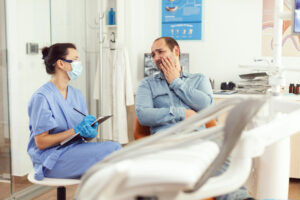
A broken tooth may cause pain, sensitivity, sharp edges or bleeding, although symptoms vary depending on the type and extent of the fracture.
The urgency of dental assessment depends on the extent of the break and symptoms. Severe or worsening pain, significant swelling, uncontrolled bleeding, tooth displacement or substantial dental trauma may require an emergency dental assessment.
What to Do with a Broken Tooth: Before Your Appointment
Dental trauma can cause teeth to chip, fracture, loosen or become displaced. While waiting for dental assessment, some temporary measures may be appropriate depending on the type of injury and symptoms.
-
Manage Bleeding and Trauma Temporarily
Gently rinse the mouth with water if debris is present. If there is minor bleeding, apply gentle, continuous pressure with clean gauze. After dental trauma, a cold compress wrapped in cloth may be applied externally for short periods. Over-the-counter pain relief may be appropriate for some people, so follow the product instructions and ask a pharmacist, doctor or dentist if you are unsure whether a medicine is suitable for you.
-
If an Adult Permanent Tooth Is Knocked Out
If an adult permanent tooth has been completely knocked out, handle it by the crown rather than the root. If it is visibly dirty, gently rinse it briefly without scrubbing the root.
-
Position your tooth back in place
Where appropriate, an adult permanent tooth that has been completely knocked out may be gently repositioned into the socket if the person is conscious and able to cooperate. If it cannot be repositioned, keep the tooth moist in milk while urgent dental care is arranged.
-
Seek Urgent Dental Assessment for a Knocked-Out Adult Tooth
A completely knocked-out adult tooth requires prompt dental assessment. For a broken tooth that remains in the mouth, the urgency depends on the extent of the fracture, symptoms and associated trauma. Treatment options vary according to the clinical findings.
Treatment Options for a Broken Tooth
A dentist can assess the fracture pattern, dental pulp and remaining tooth structure before discussing appropriate treatment options.
-
Root Canal Treatment
If a fracture is associated with irreversible inflammation or infection of the dental pulp and the tooth is otherwise suitable for treatment, root canal treatment may be considered.
Root canal treatment involves removing affected pulp tissue and cleaning, shaping and sealing the root canal system. Further restorative treatment depends on the amount and condition of the remaining tooth structure.
-
Fillings
A dental filling may be considered for selected limited fractures where enough tooth structure remains for a direct restoration. Composite resin is one tooth-coloured filling material that may be used depending on the tooth and treatment requirements.
-
Dental crown
A dental crown may be considered where the fracture pattern and remaining tooth structure are suitable for a full-coverage restoration.
Dental crowns can be made from different materials. Material selection depends on factors such as the tooth’s location, bite, remaining tooth structure and treatment requirements. The fabrication method, need for a temporary restoration and number of appointments vary according to the treatment plan.
Reducing Some Factors Associated With Tooth Fracture
Some measures may reduce exposure to factors associated with dental trauma or tooth fracture.
-
Wear a mouthguard
A custom mouthguard may be considered for contact sports. If grinding or clenching is present, a dentist can assess whether an occlusal splint or another approach may be appropriate.
-
Be careful what you eat
Avoid using teeth to bite hard non-food objects such as ice, pens or packaging. Unexpectedly biting hard objects in food can also contribute to tooth fracture.
-
Visit the dentist regularly
A dental check-up allows a dentist to assess decay, existing restorations, tooth wear and other changes according to individual needs.
Arrange an Assessment for a Broken Tooth
A broken tooth cannot be repaired with home remedies. Dental assessment can determine the extent of the fracture and whether monitoring or treatment is required. More urgent care may be appropriate where there is severe or worsening pain, significant swelling, uncontrolled bleeding, tooth displacement or substantial dental trauma.
If you have a broken tooth or another urgent dental concern, Radiant Smiles Dental Bundoora can assess the injury and discuss treatment options based on the clinical findings.
Seek urgent medical assessment if dental or facial symptoms are causing difficulty breathing, significant difficulty swallowing, rapidly increasing facial or neck swelling, uncontrolled bleeding or another potentially life-threatening problem.