Invisalign may temporarily affect speech because the aligners slightly change the space available for the tongue. Some patients notice a mild lisp, particularly when pronouncing “s” or “z” sounds. Speech often becomes clearer as the tongue adapts, although the experience and adjustment period vary between patients.
Clear aligners may appeal to some working adults because they fit closely over the teeth and are removable. Yet discretion is not only about whether colleagues can see them.
For someone who spends the day speaking with clients, answering calls, teaching, presenting or attending meetings, a more pressing concern may be: will Invisalign change the way I sound?
Some patients notice a temporary difference when they first begin wearing aligners. It may feel as though certain words are less crisp, particularly those containing “s”, “z”, “sh” or similar sounds. Others hear little or no change.
A speech adjustment does not affect everyone in the same way. Understanding why it can happen, what the first working days may feel like and when to ask your Bundoora dentist for advice can make the transition less uncertain.
Why Clear Aligners Can Change Certain Sounds
Speech depends on a coordinated pattern involving the tongue, teeth, lips, palate and airflow.
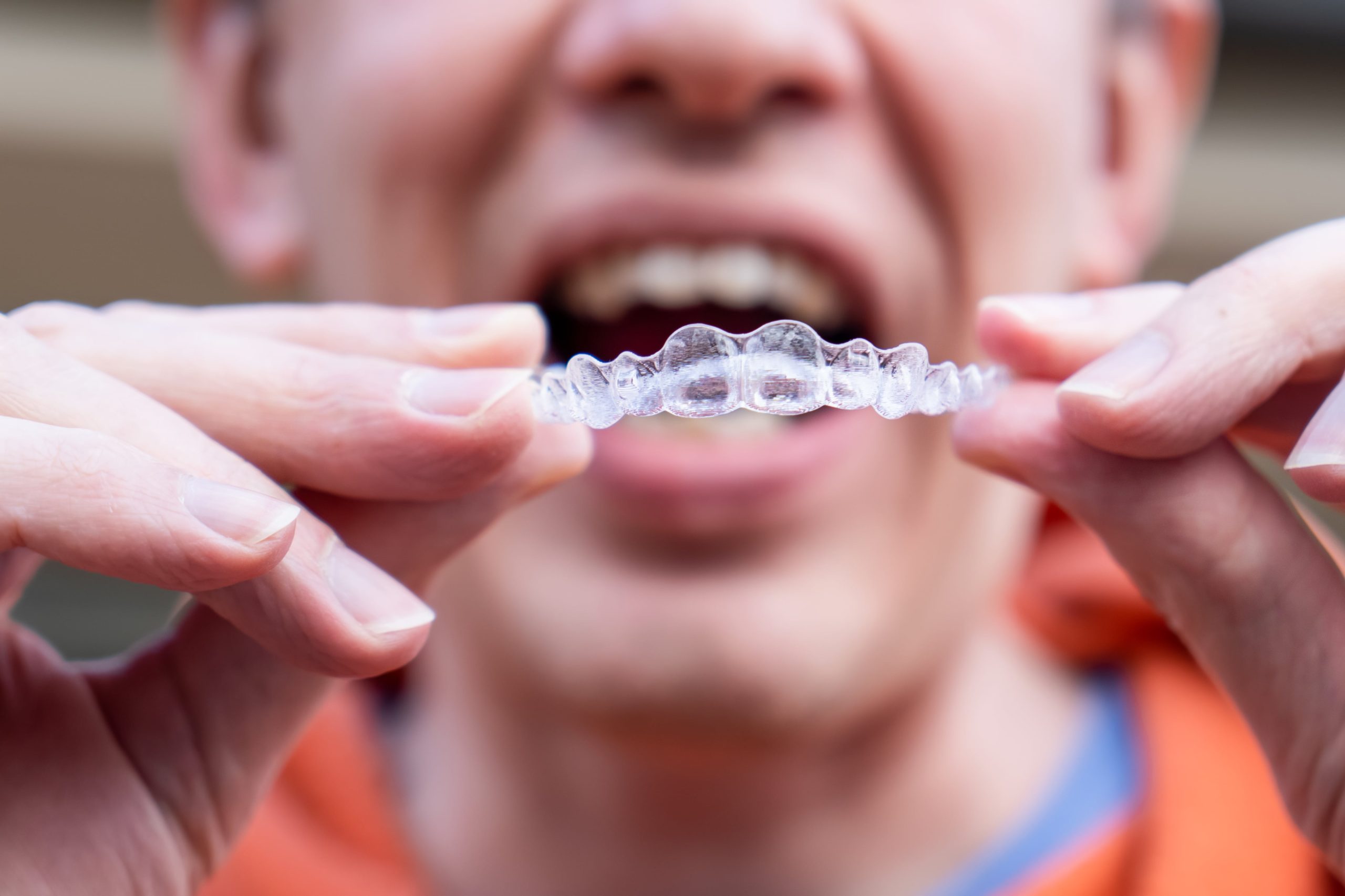
For sounds such as “s” and “z”, the tongue directs air through a narrow space near the front teeth. Invisalign trays add a thin layer over the tooth surfaces, temporarily changing the space and contact points your tongue is accustomed to using.
Your tongue may initially move as though the aligners are not there. This can slightly redirect airflow and make a word sound softer, less precise or mildly “slushy”.
Clear aligners generally allow the tongue to continue moving during speech, although the trays can temporarily change tongue contact and airflow. Instead, the mouth must adjust to a new surface during speech. This is similar to the adaptation that can occur with retainers, dentures or other appliances worn inside the mouth.
Does Everyone Develop a Noticeable Lisp?
Others become aware of a slight difference even when nobody around them notices it. This can happen because we are highly sensitive to our own voice, particularly when expecting a change.
Several factors may influence how noticeable the adjustment feels:
- The natural position and movement of the tongue
- The shape and fit of the aligners
- Whether upper, lower or both aligners are worn
- The sounds used frequently in the person’s work
- How quickly the tongue adapts to the new surfaces
- Existing speech patterns
- The presence and position of attachments
- Saliva changes during the first few days
The experience cannot be predicted solely from someone’s occupation or the appearance of their teeth. A personalised assessment is needed to determine whether aligners are clinically suitable, but even this cannot guarantee exactly how speech will feel during the initial adjustment.
What a Temporary Speech Change May Sound Like at Work
The term “lisp” can make people imagine a dramatic or persistent change. With clear aligners, the difference may be much subtler.
You might notice that:
- An “s” sound is less sharp than usual
- Certain names or technical terms require more concentration
- You speak more slowly because the trays feel unfamiliar
- Your tongue touches the aligner instead of the tooth surface
- Speech feels different even when recordings sound relatively normal
- Your mouth produces more saliva shortly after inserting a tray
These changes may stand out most when speaking quickly, reading unfamiliar material or moving between several complex words.
Someone who works independently may barely think about it. A person who regularly addresses groups could be more conscious of even a minor difference.
Will My Colleagues or Clients Notice?
Possibly, but a change that feels obvious to you may be far less apparent to another person.
When patients first wear aligners, their attention is often fixed on the appliance. They can feel its edges, hear their own speech internally and anticipate that other people will notice. This heightened awareness can make the adjustment seem more significant.
Listening to a short voice recording can provide a more objective impression. Record yourself reading a work email or explaining a familiar topic before treatment, then repeat the same passage with the aligners in.
This is not a clinical speech test, but it may help you separate how unusual the trays feel from how your voice sounds to listeners.
How Quickly Does Speech Usually Adapt?
There is no fixed adaptation period that applies to every patient.
Some people adjust within the first several days.
Others need more time before speech feels familiar again. The experience may also change when moving to a new set of trays.
The most important point is that adjustment is a process. The tongue learns through repeated speech while the aligners are in place.
Removing the trays whenever you need to talk can limit that opportunity. It may also interfere with the wear schedule recommended as part of your treatment plan.
Patients considering Invisalign Bundoora should discuss their work demands during the consultation, particularly when their role involves frequent public speaking, broadcasting, singing or detailed verbal communication.
Practical Ways to Prepare Before Returning to Work
The first day of treatment does not need to be the first time you attempt a long conversation with the aligners in.
A small amount of preparation can help you become familiar with speaking while wearing them.
Read Work-Related Material Aloud
Choose language you genuinely use at work rather than practising random sentences.
You could read:
- A presentation opening
- A customer-service script
- Industry terminology
- A lesson plan
- Names you pronounce frequently
- A paragraph from an upcoming report
This helps the tongue practise the sound combinations most relevant to your daily role.
Start With a Slower Speaking Pace
Speaking quickly can make a slight change feel harder to control.
Slowing down briefly allows more deliberate tongue placement and clearer articulation. This does not mean speaking unnaturally. A measured pace can be useful until the appliance feels less unfamiliar.
Repeat the Sounds That Feel Different
Rather than repeatedly checking every word, identify the particular sounds that feel less clear.
Words containing repeated “s” or “z” sounds are common examples. Practising them in full sentences is generally more realistic than repeating a single letter in isolation.
Keep the Aligners In While Practising
The tongue needs experience navigating the appliance.
Practising without the trays will not provide the same adjustment. Unless your dentist instructs otherwise, speech practice should be performed while wearing them.
Stay Hydrated
A dry mouth can make speaking feel more difficult, while increased saliva can also occur when an appliance is new.
Drinking plain water may make the mouth feel more comfortable. Follow the care instructions provided for eating and drinking with your aligners.
Should I Start Invisalign Before a Major Presentation?
A busy professional calendar is worth discussing before treatment begins.
You may prefer not to receive your first trays immediately before:
- Delivering a major conference presentation
- Recording important audio or video content
- Attending a job interview
- Leading an extended training session
- Appearing in court
- Performing on stage
- Speaking at a wedding or formal event
This does not mean treatment must be delayed for every meeting. It simply allows time to consider whether a short adjustment window would reduce unnecessary pressure.
Treatment scheduling also depends on clinical factors and appointment availability, so avoid deciding when to start based only on speech concerns. Your dentist can explain the planned process and help you understand what may be practical in your circumstances.
What About Teachers, Salespeople and Phone-Based Roles?
Certain occupations place unusually high demands on speech.
Teachers and Trainers
Speaking for long periods can increase awareness of a new appliance. Practising lesson content aloud before returning to the classroom may help. Keeping water accessible can also be useful where workplace policies allow it.
Sales and Customer-Service Professionals
Fast-paced conversations may initially require a slightly more deliberate rhythm. Practising standard introductions, product names and frequently asked questions can help the speech adjustment feel less distracting.
Managers and Presenters
Healthcare and Legal Professionals
Precise terminology and clear communication can be essential. Any persistent difficulty that affects professional communication should be raised during a review rather than managed by repeatedly leaving the aligners out.
Singers, Actors and Broadcasters
These roles involve specialised control of articulation, resonance and performance. Clear aligners may have implications beyond ordinary conversation, so professional demands should be discussed before commencing treatment.
Can I Remove Invisalign for Important Meetings?
Invisalign aligners are removable, but treatment depends on wearing them according to the schedule prescribed by your dentist.
Occasionally taking them out for eating, cleaning or another instructed reason is part of normal use. Routinely removing them for calls, meetings and conversations can accumulate into a substantial amount of missed wear time.
It may also create a cycle in which the tongue does not fully adapt because the aligners are removed whenever speech feels unfamiliar.
Do not create your own reduced wear schedule without advice. If your occupation makes consistent wear difficult, explain this during the planning stage. Lifestyle suitability is an important consideration when assessing options forteeth straightening Bundoora.
Do Invisalign Attachments Make a Lisp Worse?
Attachments are small tooth-coloured shapes that may be bonded to selected teeth to help the aligners apply particular forces.
They sit on the outside surfaces of the teeth and are covered by the trays. Because most speech sounds rely more heavily on tongue contact near the inner surfaces of the front teeth and the palate, attachments are not necessarily the main reason for a speech change.
However, every aligner design is individual. The overall tray shape, tooth position and the way the tongue naturally moves can all affect how speech feels.
Not every patient requires the same number or placement of attachments. Their role should be explained as part of the treatment plan rather than treated as a surprise after aligners arrive.
When a Speech Change Should Be Reviewed
A short adjustment phase can occur, but that does not mean every ongoing speech concern should be ignored.
Contact your dentist when:
- Speech remains difficult rather than gradually becoming easier
- An aligner appears distorted, cracked or poorly seated
- A sharp edge interferes with tongue movement
- The tray repeatedly lifts away from a tooth
- Speaking causes persistent irritation or injury
- You cannot wear the aligners as directed because of your work
- A speech change is affecting essential professional communication
The dentist can examine the fit, check whether the trays are seating correctly and determine whether any adjustment or further guidance is appropriate.
Do not trim, heat, reshape or alter an aligner yourself. Changes made outside the treatment plan could affect its fit and the forces applied to the teeth.
A Lisp Is Not the Only Work-Related Consideration
Speech may be the first concern, but working adults should also think about how aligners fit into the rest of the day.
Consider:
- When you will remove them for meals
- Where you can brush and clean your teeth
- How you will store the trays safely
- Whether you frequently drink beverages other than water
- How irregular shifts may affect routines
- Whether work travel complicates appointments
- How consistently you can follow the prescribed wear schedule
These practical details help determine whether removable aligners suit your lifestyle. Clinical suitability remains essential, but a treatment plan also needs to be realistic enough to follow.
Clear Aligner Care Across Melbourne’s Northern Suburbs
Adults exploring discreet orthodontic care attend Radiant Smiles Dental Bundoora from across Melbourne’s northern suburbs. Work schedules, presentation commitments and daily routines can all be discussed during assessment rather than treated as concerns patients must manage alone.
Patients visit from Macleod, Watsonia, Greensborough and Rosanna when considering how aligner treatment may fit around professional and personal responsibilities.
The clinic also supports patients travelling from Reservoir, Thomastown, Lalor, Mill Park and Eltham for assessment, treatment planning and ongoing reviews.
Frequently Asked Questions
Can I practise speaking before my first day back at work?
Yes. Reading work-related material aloud while wearing the aligners gives your tongue an opportunity to become familiar with the trays. Practising before an important meeting may also help you become more familiar with speaking while wearing them.
Will every new aligner make my speech change again?
Some patients notice a brief difference after changing trays, while others do not. A new aligner may feel tighter or slightly different, but previous experience wearing trays can make later adjustments feel more familiar.
Are some words harder to pronounce with Invisalign?
Words containing sounds such as “s”, “z” or “sh” may initially feel different because these sounds depend on precise tongue placement and airflow near the front teeth. The particular words affected vary between individuals.
Can I use speech exercises from a video without asking my dentist?
General reading and speaking practice is usually straightforward, but online exercises are not a substitute for personalised advice. Persistent or significant speech difficulty should be assessed rather than managed solely through internet techniques.
What happens if an aligner edge irritates my tongue while speaking?
Contact your dental clinic for guidance. Avoid cutting or reshaping the tray yourself, as this may change its fit or interfere with planned tooth movement.
Disclaimer: This article provides general educational information about possible speech changes during Invisalign treatment. Individual experiences, treatment requirements and adjustment periods vary. It does not replace a dental assessment or personalised advice. Speak with a qualified dental professional if you are considering clear aligners or experience persistent difficulty while wearing them.